
Share Billy 'Bill' Haynes Hendricks's obituary with others.
Invite friends and family to read the obituary and add memories.
Stay updated
We'll notify you when service details or new memories are added.
You're now following this obituary
We'll email you when there are updates.
Select your format and elements to print

IN LOVING MEMORY OF Billy 'Bill' Haynes Hendricks
Billy 'Bill'
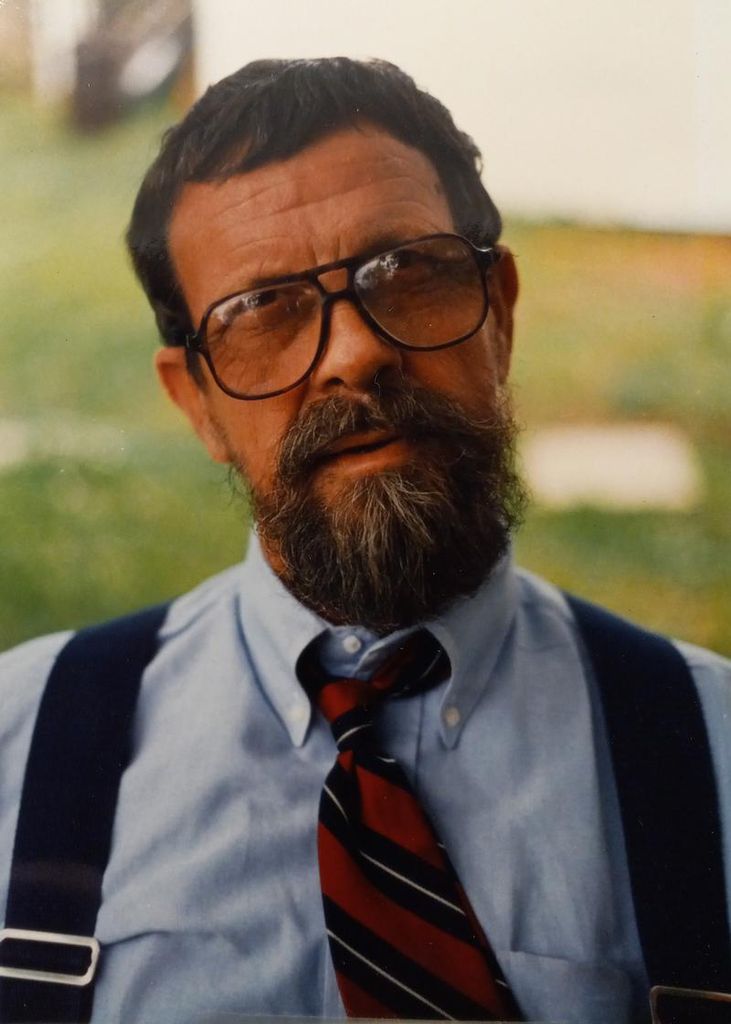
Haynes Hendricks
Nov 13, 1937 — Apr 16, 2026
San Antonio
Billy 'Bill' Haynes Hendricks' Obituary
Bill Hendricks, one of the last of the old school San Antonio newspaper reporters, whose work included coverage of the Kennedy assassination, the Watergate Hearings and the Tet Offensive in Vietnam, died Thursday, April 16 2026 while in hospice care.
Hendricks, 88, who worked for eight newspapers over a four-decade career, made his name in San Antonio as an ace police and investigative reporter for the San Antonio Express-News. He arrived in San Antonio in 1979 as one of a group of hard-drinking, hired guns soon known as "the Fort Worth Mafia." Along with John Moulder, Tommy West and John Tackett, they quickly took up arms in the ongoing war between the San Antonio Light and two sister papers owned by Rupert Murdoch.
Competing In that wild and wooly era of bikini girls, lurid headlines and screaming rack cards, were The Light, The News and The Express. Each day their reporters fought tooth and nail over everything from scraps to scoops.
And there was no love between the News and Express reporters. The competition with the Light where the better resumes were found, was far harsher. It was captured in a snarky jibe after a certain Light police reporter jumped ship. "When Ed Lane went to the Express-News, he raised the average IQ in both newsrooms," remarked a Light editor.
Back then, cops and crime reporting drove rack sales, and here, Hendricks, who initially worked for the News, had few peers. "He seemed to know every cop, every judge, every lawyer and had sources high and low. He harkened back to the days of dogged shoe-leather journalism, rarely giving up when he sank his teeth into a story," said Thomas Edwards, a longtime member of the paper's police team. In an era before cell phones, the internet, public information officers with college degrees and other conveniences, reporters relied on their wits, sources and persistence to bring a story home.
Taciturn, wary and sometimes haphazardly dressed, Hendricks was easily underestimated. "Bill often squinted from behind his glasses, wore his necktie askew and his coat loosely. Often his shirt became slightly untucked from his trousers," recalled Edwards. "But even if he looked like a slightly rumpled character from "The Front Page," he was always the sharpest reporter in the newsroom and one of the best writers in town," he added.
Editor Ed Kingshott, who handled many of Hendricks' stories in that rollicking era, recalled him as a savvy, reliable veteran, up to any assignment. "He was very aggressive. He had more than his share of scoops against the Light and the Express," said Kingshott. "On the rare occasion when Bill got beaten on a story, he'd always come back with a good second day lead," he added.
Hendricks' abilities went well beyond crime reporting. He was an award-winning investigative reporter and could also be creative when it came to handling unusual assignments. As a young reporter, Jacque Crouse worked closely with him in the early 1990s on a series of stories that had national impact about how insurance companies were abusing the mental health system. "He taught me to think about what information I needed to get, how best to approach it without having sources dry up or stop cooperating, and to have all these mapped out in my head well before starting," she recalled. "I had always known him mainly as a spot news reporter and never realized how well he worked on long-term stories. Turned out he was very good at that too," she added. Decades later, she would step in as one of Hendricks' final caretakers.
Assigned to do some articles on San Antonio's growing homeless population, Hendricks didn't just dial up the experts and pay a quick visit to a soup kitchen. Instead, he dug his old clothes out of the closet and went out into the street, melding into the homeless scene for several days. The result was a series of eye-catching stories.
Hendricks was born to Jewel Haynes, a teenaged mother, in Anna, Texas, a small railroad town 40 miles north of Dallas on Nov. 13, 1937. George Hendricks, his young father and a drinker, died in a car wreck before Bill was born. Hendricks was raised by his maternal grandparents Robert and Nora Haynes. When Jewel later married, he recalled, he wasn't welcomed by her husband.
His legal first name was Billy, given him by his mother who didn't want anyone calling him William. He preferred Bill. Growing up in rural north Texas, Bill recalled an uncle's fighting chickens, large vegetable gardens and occasionally picking cotton for his grandfather on weekends. For plucking 100 pounds, more than a half days work, he was paid $3 which seemed fair at the time.
He got into the newspaper game in Denton as a sports freelancer while attending what later became North Texas State University. His first big job was at the Fort Worth Press. His first big story came on Nov. 23, 1963. Hendricks was the relief police reporter that day, and when the news hit, he spent the day trying to piece together a profile of Lee Harvey Oswald.
However, his most vivid memory was of a football game. Hendricks flew to Cleveland the day after the assassination to cover the Cowboys-Browns game. "It was surreal," he said, "watching a football game nobody wanted to play," he recalled in a 2013 interview with Express-News columnist Jeanne Jakle. The Cowboys lost, but "what I remember most was the silence," Hendricks said, "the overwhelming silence in the stands that day."
A few years later, the Fort Worth Star- Telegram sent Hendricks to Vietnam. His visit coincided with the Tet Offensive, a massive attack against U.S. and ARVN troops by the Viet Cong and North Vietnamese. As Hendricks later related, he nearly didn't make it back. He and other members of the press were about to board a helicopter to view firefights from the air when a young lieutenant, also from Fort Worth, pulled rank and told them to make way for him and his soldiers. Hendricks was bumped from that ride, which he said ended 20 minutes later when the helicopter was shot down. All on board perished.
Hendricks married late in life to Barbara Dean, eldest daughter of Homer Dean, the Jim Wells County judge during LBJ's notorious Box 13 election heist. Their union lasted more than 30 years. They had no children together. He took care of her during her long struggle with Amyotrophic lateral sclerosis also known as Lou Gehrig's Disease. She died in 2022.
In 2023, he sold his house and moved into an assisted living facility on Fredericksburg Road. There he was known as "Old Bill," a man who kept to himself and at times talked wistfully about moving to Austin or Fort Worth.
At the time of his death, Hendricks had almost no surviving relatives beyond a stepson Jack Steele and sister-in-law Grace Black who live in Austin. He had also managed to outlive almost all of his old friends.
Decades ago, the Express-News finally won the newspaper war, forcing the Hearst Corporation in 1993 to close the San Antonio Light after a 112-year run. Some, like Kingshott, believe it was the arrival of Hendricks and the rest of the Fort Worth mafiosos that tipped the balance.
Hearst in turn, bought the Express-News from Murdoch's News Corp and still owns it. Despite being on the winning side, some of the older reporters and editors at the Express-News eventually found themselves in disfavor with the new Hearst management. Sometimes it seemed a matter of style over substance. Some were forced out. Others, like Hendricks managed to hang on. He finally reached retirement age in 2002 but not without picking up some bruises and disappointments on the way.
In an elaborate newsroom ceremony featuring a cake, bells and a huge goodbye card created by artist Felipe Soto, Hendricks got his well-earned sendoff. With the entire newsroom staff looking on, various Express-News editors, one after another, extolled his many fine qualities, as a crime reporter, investigative reporter and mentor to young reporters. Among those praising him were some who had made his last years difficult. When all the fine words and hyperbole were finally spent, the room's attention turned to Hendricks, who stood silently off to one side. There was an awkward extended pause. When he finally spoke, it was to ask a simple question. "How come none of that was ever on my evaluations?"
A private graveside service was held and a Public Memorial Service will be held at a later date.
Arrangements by Tondre-Guinn Funeral Home. www.tondre-guinn.com
Billy 'Bill' Haynes Hendricks' Guestbook

Visits: 1
This site is protected by reCAPTCHA and the
Google Privacy Policy and Terms of Service apply.
Service map data © OpenStreetMap contributors